

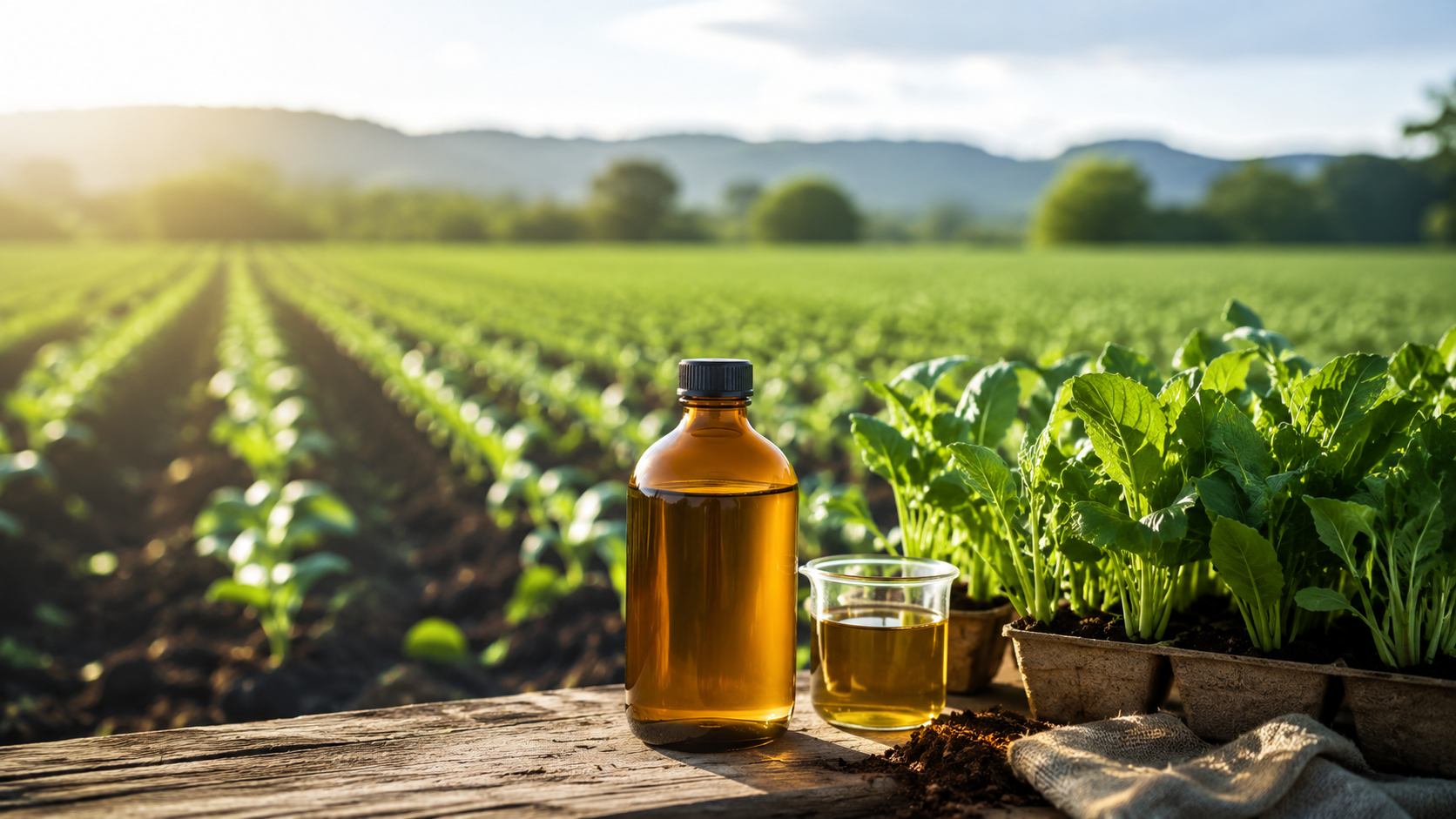
Virro’s Strategy for Urine Processing, Stabilization & Fertilizer Recovery
Urine stabilization helps preserve nitrogen, reduce odor, and make collected urine easier to store or process. Depending on the method, stabilization may involve changing pH, slowing biological breakdown, filtering, treating, or preparing the urine for concentration.
Turning Waste Into Value Starts With Separation
At Virro, a core part of our mission is to help people convert biowaste into value instead of sending it away as a problem.
That mission shapes the way we design urine-diverting composting toilets. Solid waste and urine are very different streams. They behave differently, smell different, store differently, and carry different fertilizer value. When they are mixed together, they become harder to manage. When they are separated at the source, each stream can be handled in the way that makes the most sense.
For solids, that means aerobic composting: creating the right conditions for humanure to break down into a stable, useful end product.
For urine, the opportunity is different. Urine is nutrient-rich, but it must be collected, stored, stabilized, deodorized, and, in some cases, concentrated before it can become a practical fertilizer product.
That is why Virro’s long-term product strategy includes not only composting toilet systems, but also urine diversion and urine processing solutions.
What Does “Urine Stabilized and Deodorized” Mean?
In our marketing materials, we sometimes use phrases like “urine stabilized and deodorized.” That sounds simple, but it points to an important technical challenge.
Fresh urine contains valuable plant nutrients, especially nitrogen. The problem is that much of that nitrogen can become volatile during storage. As urine breaks down, nitrogen can be converted into ammonia gas. Ammonia is the sharp smell most people associate with stored urine.
In plain English: urine odor is often valuable nitrogen fertilizer escaping into the air.
Urine stabilization is the process of preventing or slowing that nitrogen loss. Deodorization is the practical result people care about most: less odor in the container, tank, bathroom, service area, or processing system.
The goal is not just to make urine easier to live with. The goal is to protect the nutrient value so it can be recovered instead of wasted.
Why Urine Is the Bigger Fertilizer Prize
Composting solids matters. It reduces waste, supports sanitation, and helps recover organic matter.
But when it comes to fertilizer nutrients, urine is the bigger prize.
Research on source-separated urine shows that urine is less than 1% of domestic wastewater volume, yet it can contain roughly 80–90% of the nitrogen and 50–65% of the phosphorus found in domestic wastewater nutrient flows. That makes urine one of the most concentrated and practical targets for nutrient recovery.
That is one reason urine diversion is such an important design principle for Virro. Separating urine early gives us a cleaner, more concentrated stream to work with.
The Water Quality Problem: Nutrients in the Wrong Place
Nitrogen and phosphorus are essential plant nutrients. On a farm, in the right dose, they help grow food. In rivers, lakes, estuaries, and coastal waters, too much of those same nutrients can cause major water quality problems.
In the United States, 58% of river and stream miles, 40% of lake acres, 17% of estuarine square miles, and 23% of Great Lakes shoreline miles assessed by the U.S. EPA have excess nutrients. Those nutrient loads come from a mix of agriculture, urban runoff, and wastewater treatment, and they can contribute to algal blooms, fish mortality, and degraded water quality.
This is the nutrient loop we are trying to close.
The issue is not that nitrogen and phosphorus are bad. The issue is that our current systems often move them to the wrong place: out of homes, cabins, parks, events, boats, RVs, and communities, then into wastewater systems and waterways instead of back into productive use.
How Much Fertilizer Value Is in Urine?
The fertilizer value of urine is significant at national scale.
Using an estimated 2026 U.S. population of about 349 million people, 11 grams of nitrogen in urine per person per day, and a urea nitrogen value of about $0.90 per pound of nitrogen, the nitrogen flushed in urine in the United States represents more than $2.7 billion per year in potential fertilizer value. The population estimate is consistent with 2026 CBO projections, and current fertilizer market reporting has placed urea nitrogen around $0.90 per pound of nitrogen.
That number is not meant to suggest that every gallon of urine can instantly become a commercial fertilizer product. Collection, treatment, logistics, regulations, and customer acceptance all matter.
But it does show the size of the opportunity.
We are already paying to make nitrogen fertilizer. Then we are paying again to remove nitrogen from wastewater. A better system would recover more of that nutrient value before it becomes a water quality burden.
Can Human Urine Really Become Fertilizer?
Yes, when properly collected and treated, urine can become a valuable fertilizer.
The Rich Earth Institute in Vermont has been researching urine-derived fertilizer since 2012 and operates a urine nutrient reclamation program that supplies more than 12,000 gallons of urine-derived fertilizer to local farm partners each year. Its farmer guidance notes that urine fertilization studies around the world have shown yields comparable to synthetic fertilizers across multiple crops, and Rich Earth has conducted field trials in the U.S. Northeast on crops including hay, hemp, sweet corn, figs, cut flowers, and nursery trees.
Companies and research teams around the world are also showing that urine can be stabilized, treated, concentrated, and converted into usable fertilizer products.
Sanitation360 has developed a process for collecting and stabilizing urine, then converting it into concentrated liquid fertilizer or dry granular fertilizer that can be used with conventional farming equipment.
PeeCycling, a University of Cape Town spin-out, is developing a modular three-stage process for harvesting, stabilizing, and concentrating urine into valuable products. The team includes Prof. Dyllon Randall, Dr. Caitlin Courtney, and CTO Anna Reid.
This is not fringe science. It is an emerging circular sanitation category with real research, real field trials, and real companies working to make urine nutrient recovery practical.
The Main Challenge: Stabilizing Nitrogen Before It Escapes
Urine handling is challenging because nitrogen can be lost as ammonia.
That ammonia odor is not just unpleasant. It is a signal that the system is losing fertilizer value.
A good urine processing strategy needs to solve several problems at once:
- Odor control — so urine storage is acceptable in homes, RVs, cabins, events, parks, and commercial environments.
- Nitrogen preservation — so fertilizer value is not lost to the air.
- Safe storage — so collected urine can be held before treatment, transport, or use.
- Concentration — so the liquid becomes easier and more economical to move, store, and apply.
- Regulatory fit — so the end product can be used in ways that match local rules and agricultural standards.
That is why Virro is not treating urine diversion as a side feature. It is part of the larger system design.
Common Urine Stabilization Methods
There is no single best urine stabilization method for every toilet, tank, site, climate, or use case. Different applications may need different solutions.
Methods being studied or used across the field include:
- Citric acid or other acidification methods to reduce ammonia volatilization
- Calcium hydroxide and alkaline stabilization methods
- Hydrogen peroxide treatment
- Biochar-based treatment
- Enzymatic treatment
- Filtration and polishing steps
- Thermal or dehydration-based processing
- Reverse osmosis or other concentration methods
The right choice depends on the product, the setting, the holding time, the service model, the final fertilizer pathway, and local regulations.
For a compact residential or travel toilet, the first priority may be odor control in a urine jug or holding tank. For a commercial park, event, or public restroom system, the priority may be bulk storage, service logistics, nutrient recovery, and fertilizer production.
Virro is designing around that range of use cases.
Urine Concentration: Making Fertilizer Practical
Fresh urine is mostly water. That makes direct reuse possible in some settings, but it also makes transport and storage less efficient.
Once urine is stabilized, it can be concentrated or dehydrated into a more valuable fertilizer format.
Proven and emerging urine concentration methods include:
- Reverse osmosis to reduce water volume and concentrate nutrients
- Dehydration using heat, airflow, or passive solar energy
- Distillation or evaporation-based systems
- Freeze concentration or freeze-drying approaches
- Granular fertilizer production
The goal is simple: keep the nutrients, remove as much unnecessary water as possible, and create a product that is easier to store, transport, sell, or apply.
How This Fits Virro’s Product Strategy
Virro’s toilet systems are being designed around separation first.
Renew is our compact urine-diverting composting toilet for homes, cabins, RVs, vans, boats, and off-grid living spaces.
Locale is our mobile commercial system for events, parks, temporary sites, and other high-use locations where traditional portable sanitation creates odor, waste, and service challenges.
Vault is our permanent commercial system for parks, trailheads, campuses, rest areas, and other high-use public environments where below-grade composting and resource recovery can replace older waste infrastructure.
Across these systems, the design principle is the same: separate the waste streams early so solids and urine can each be handled properly.
What Virro Is Launching First
Virro’s initial Renew product launch is planned for October 2026. The first Renew systems will not include built-in urine processing technology.
That is intentional.
We believe the right path is to launch Renew with strong urine diversion, reliable composting performance, and practical urine storage options, while continuing internal testing and product development on urine stabilization and processing.
Through the summer of 2026, Virro is conducting internal trials and researching different urine stabilization methods. Our near-term goal is to identify natural additive options that can help reduce odor in Renew urine storage jugs and external holding tanks.
By early 2027 or sooner, Virro plans to recommend and offer a range of urine odor-control and stabilization additives for customers using Renew and related systems.
At the same time, we are refining integrated urine processing designs for our commercial product lines, where higher volumes create stronger opportunities for stabilization, concentration, service, and nutrient recovery.
Why We Are Taking a Phased Approach
Urine processing is too important to treat as a gimmick.
A small additive that helps a household urine jug smell better is not the same thing as a commercial nutrient recovery system. A park restroom, event system, off-grid lodge, or public infrastructure project may need a very different treatment pathway than a single residential toilet.
That is why Virro is taking a phased approach:
Phase 1: Separate the streams.
Design toilets that keep urine and solids apart from the start.
Phase 2: Improve storage and odor control.
Offer practical urine stabilization and deodorization options for jugs, tanks, and external storage.
Phase 3: Integrate processing into commercial systems.
Develop commercial urine stabilization and concentration systems for higher-volume use cases.
Phase 4: Support fertilizer recovery pathways.
Work toward systems that make it easier to convert collected urine into stable liquid or dry fertilizer products where local regulations allow.
This is how we move from waste management to resource recovery.
Frequently Asked Questions About Virro and Urine Processing
Why do Virro toilets separate urine from solids?
Virro toilets separate urine from solids because each stream is easier to manage on its own. Solids compost better when excess liquid is removed. Urine is easier to store, stabilize, deodorize, and process when it is collected separately.
Is urine more valuable than solid waste as fertilizer?
In terms of plant nutrients, yes. Urine contains a large share of the nitrogen and phosphorus in human wastewater, even though it represents a very small portion of total wastewater volume. That makes urine a major target for nutrient recovery.
Why does stored urine smell?
Stored urine can smell because nitrogen can convert into ammonia gas. That ammonia odor is a sign that nitrogen is being lost from the liquid into the air.
What does urine stabilization do?
Urine stabilization helps preserve nitrogen, reduce odor, and make collected urine easier to store or process. Depending on the method, stabilization may involve changing pH, slowing biological breakdown, filtering, treating, or preparing the urine for concentration.
Can urine from composting toilets be used as fertilizer?
Urine can be used as fertilizer when it is properly collected, treated, stored, and applied according to local rules. Programs such as the Rich Earth Institute have shown that urine-derived fertilizer can be used successfully in farm settings.
Will Renew include built-in urine processing?
The initial Renew launch planned for November 2026 will not include built-in urine processing technology. Renew is designed around urine diversion and practical storage. Virro is currently testing stabilization and odor-control options, with additive recommendations planned for early 2027 or sooner.
Is Virro developing commercial urine processing systems?
Yes. Virro is refining integrated urine processing concepts for commercial systems such as Locale and Vault, where higher-volume collection creates stronger opportunities for stabilization, concentration, service, and nutrient recovery.
The Bigger Picture: Closing the Loop
The future of sanitation is not just about using less water. It is about recovering more value.
Every day, valuable nutrients are flushed away, diluted, treated as waste, and discharged into systems that were never designed to close the loop. Urine-diverting composting toilets create a different pathway.
They separate the streams.
They reduce the burden on water-based sanitation.
They make composting more effective.
They make urine nutrient recovery possible.
They help turn biowaste into a resource.
That is the strategy behind Virro’s urine processing work.
We are starting with practical separation, storage, and odor control. We are building toward integrated stabilization and concentration. And we are designing for a future where human biowaste is not wasted at all.
It is recovered, stabilized, and returned to value.
Ready to close the loop?
Explore Virro systems for homes, cabins, vehicles, and places beyond the grid.