

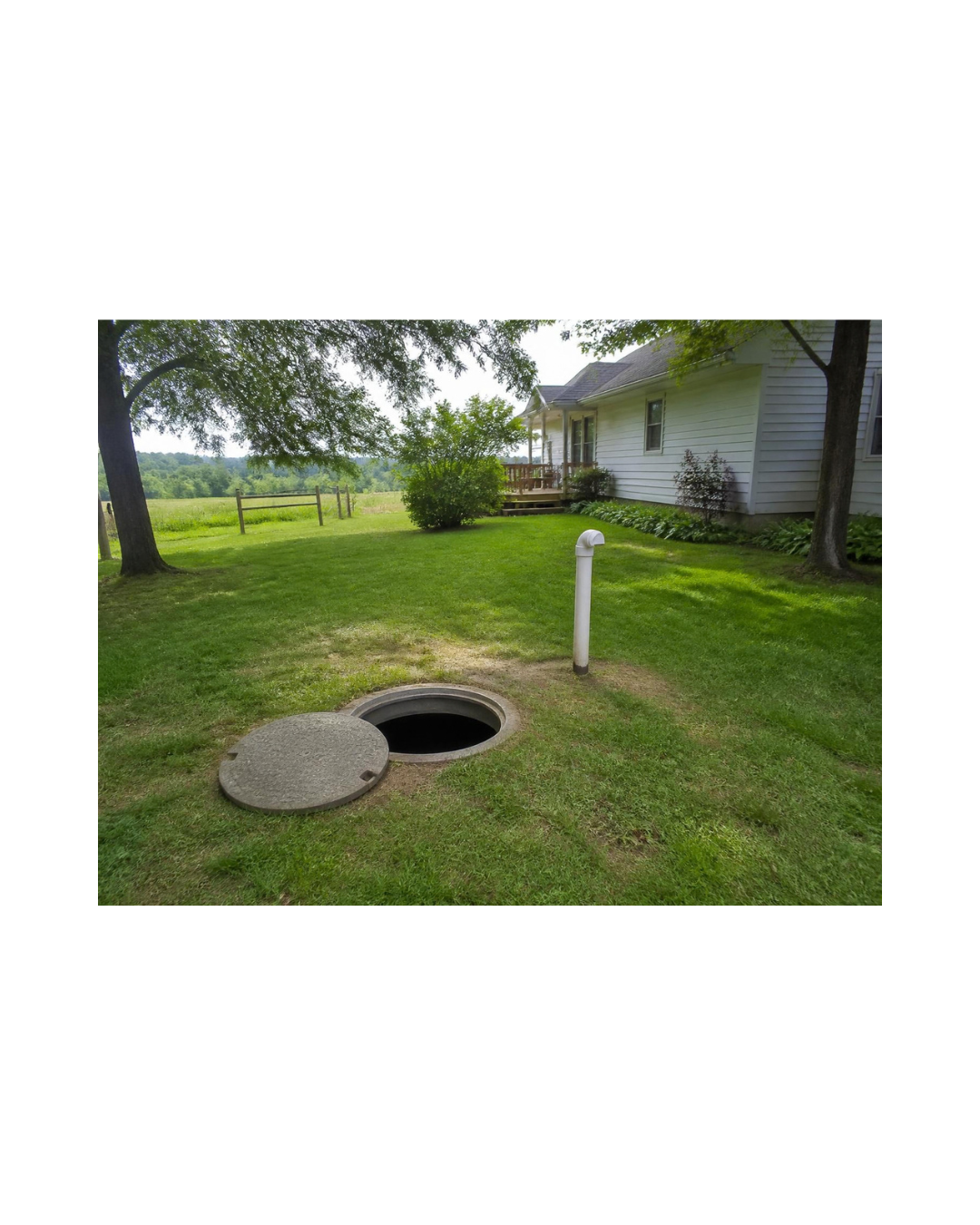
When the Septic Starts to Fail: Why a composting toilet is a good temporary or backup solution.
In those cases, a urine-diverting waterless toilet can be a short term solution that turns into a long term temporary solution, depending on local regulations. In places like Australia and New Zealand there is a pathway for a composting toilet to be permitted as a permanent alternative to septic systems and sewers. In Mexico this appears to be a gray area.
By Gaelan Brown
The Field
October 2026
I’ve lived through a couple of septic system failures, and at one point I designed and built my own septic system for an off grid camp. For some reason this topic always interested me, even though it's not a fun topic.
Maybe I suffer from childhood septic-failure PTSD. :-)
As a teenager our home septic system failed and I got to learn how they work when we dug it up and replaced it. But for about 6 months, including a couple months of winter, our only toilet was an outhouse out back, which I don’t recommend, unless you like being bombed by hundreds of flies while you do your business. The first house my wife and I bought had a near-failure of our septic system, but we were able to solve it, because I wasn't afraid to "look under the hood" and get some maintenance done.
I’m not an expert on septic systems or engineering and I'm not offering any specific advice about how to fix a problem, but I’d like to share what I learned from personal experience.
The most important question for me is this: What are the early signs of septic system failure? Catching issues early gives you a chance to avert a costly and disturbing situation known as septic system failure.
Sometimes the symptoms start with just a slow change: a drain that takes longer than it used to. A soft spot in the yard you didn’t notice last year. A smell that shows up after heavy use with lots of visitors, then disappears long enough that you talk yourself out of thinking about it.
That moment — early noticing — is the most important moment. Because sometimes the issues can be resolved if you don’t wait too long. This is not professional advice, not legal advice. Local codes and a qualified professional are your best bets when you're unsure.
But I’ll give you a path that might help.
1. Reduce or temporarily eliminate the volume of material going into your septic system.
2. Find any records available about your septic system design and maintenance.
3. Get your septic tank pumped out and fully inspected, particularly the drain-pipe that feeds into your leach field. Sometimes toilet paper or soap residue (especially laundry soap and lint) can clog up that drain-pipe, and it can be easily cleared out.
While you get professional help or research solutions, here are four things you can do to reduce or eliminate what’s flowing into your septic tank:
-
Connect your washing machine drain behind your washing machine into a flexible 1.5 inch drain pipe, so laundry rinse water can be drained into your trees or shrubs temporarily. Be sure that the water that gets drained won’t overflow to places you don’t want it, like your neighbor’s herb garden. Make sure to keep the drain hose from the washing machine in it's normal position at the top rear of the washing machine. Make sure the drain pipe from the machine fits into your temporary drain pipe without being a tight fit, as that can cause issues with your rinse/load cycle.
-
Stop using your flush toilets and get a self-contained urine-diverting composting toilet, such as Renew, OGO or Compost Closet. Depending on which one you get, it can also be something you take with you on camping or hunting trips. Renew makes it easy to setup the toilet on top of an existing toilet drain if you want a longer-term solution, with the urine draining into the existing plumbing or into an internal tank.
-
If your composting toilet uses a real composting process, when it’s time to empty your humanure compost material from the toilet you will still need to keep composting it in your back yard, or dispose of it as trash. This material is not going to be “ready for your garden” as it comes out of the toilet. If you continue to compost it properly in your backyard (meaning mix it at least once per week, keep it from drying out or being saturated with water/snow) that material should be good for general landscaping and trees (but not necessarily ready for your vegetable garden). after 30 to 90 days of additional composting, depending on the composting process used.
-
If your temporary backup composting toilet has urine diversion into an internal container, you’ll need to empty that urine periodically (two or three times per week depending on which toilet you have and how many people). If you want to deodorize and store the urine and use it as fertilizer, there are various proven ways to do that. Organizations such as the Rich Earth Institute in Vermont have developed best practices for how to use human urine as fertilizer. Urine can be easily deodorized and stabilized by adding an acid or an alkaline compound, or with natural enzymes and probiotics. In general plants want a 1 to 10 dilution of human urine, meaning 1 gallon of urine is mixed with 10 gallons of water.
 ## Where waterless fits — as one option
Most homes will repair or replace the septic system and keep the flush toilets. But the words “temporary” and “backup” have different interpretations in different situations.
Some home sites are fighting limited space, difficult soil, high septic system replacement quotes, or a desire to take toilet waste out of the wastewater load.
In those cases, a urine-diverting waterless toilet can be a short term solution that turns into a long term temporary solution, depending on local regulations. In places like Australia and New Zealand there is a pathway for a composting toilet to be permitted as a permanent alternative to septic systems and sewers. In Mexico this appears to be a gray area.
In most US jurisdictions there are currently no clear pathways to get a composting toilet approved within building codes and environmental regulations.
But as far as I know there is no law against putting a self contained composting toilet in your RV, camper, garage, shed or on your back porch, especially in a “temporary” context.

Ready to close the loop?
Explore Virro systems for homes, cabins, vehicles, and places beyond the grid.