

Can We Do Tiny House Life Without Dump Stations and Sewers?
Sonora California recently built a new sewage treatment plant for $35 million to serve just 24,000 residents. A large percentage of existing residential building lots in California counties like Santa Cruz and Mendocino cannot be developed because sewer and septic systems are not feasible. The affordable housing issue is hitting California harder than many states, and the cost of conventional sanitation infrastructure is central to this issue.
Aug 2026 · The Field
Tiny houses solve many problems related to affordable housing. Sanitation is the problem that keeps showing up as the most expensive limiting factor.
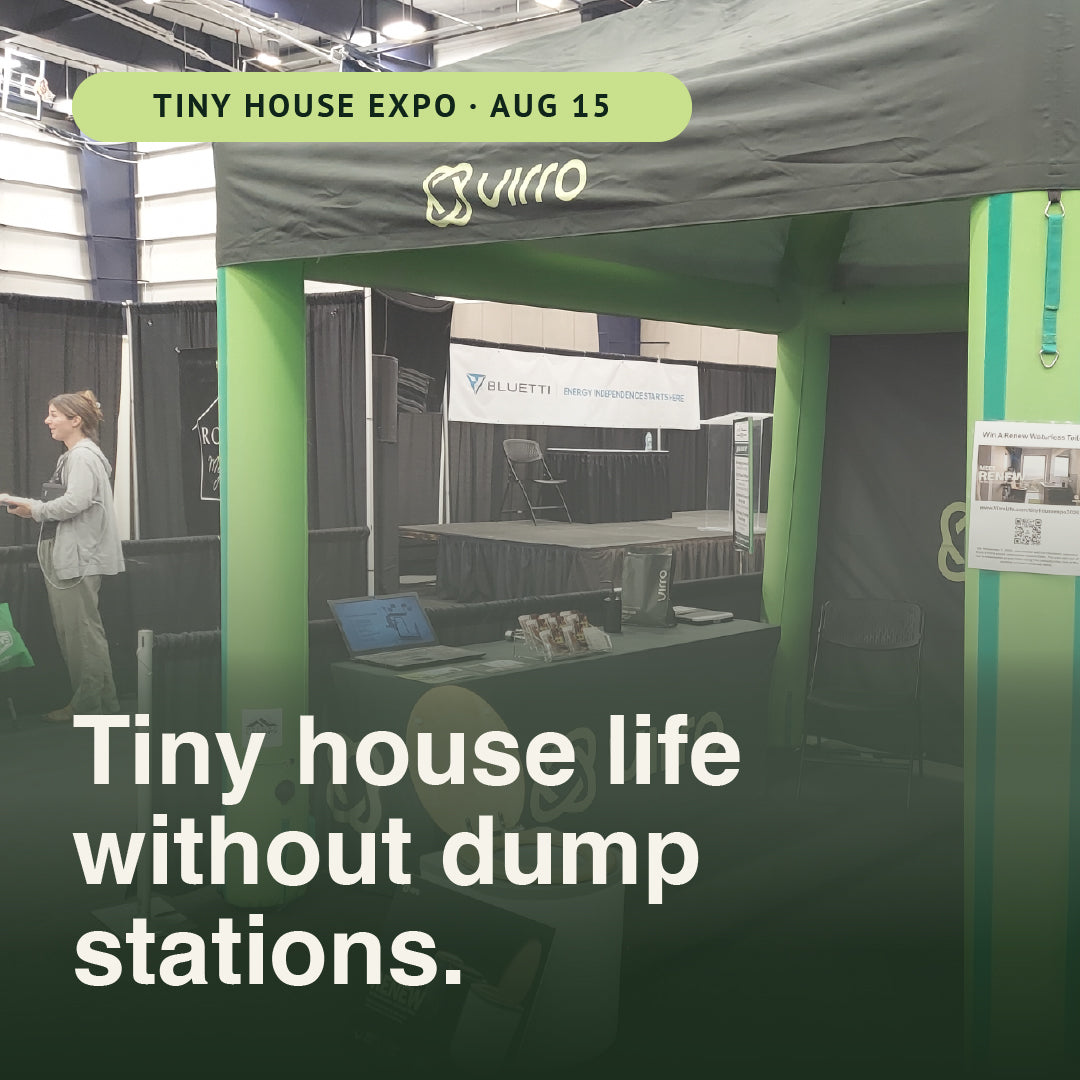
At the 2026 Tri-County Home & Garden Show’s Tiny House Expo this August, Gaelan Brown presented each day on the Seminar stage about a simple question that often goes unasked: aside from legal questions, what are the best alternatives to sewer and septic systems for your tiny house or ADU?
Gaelan shared his personal story and lessons learned about this question, after spending many years living in a home made “tiny house on wheels” and an old Airstream trailer while traveling all over the US and Mexico. Here is a Youtube link to a webinar recording of the Seminar.
The problem nobody puts on the mood board
Tiny living sells freedom: less stuff, less debt, more land under your feet. Tiny houses are seen as a solution to affordable housing, but then the bathroom question arrives and you realize you might need to spend almost as much on a septic system as you did for your tiny house. Or you might have to wait a year for your sewer connection permit approval.
Conventional sanitation doesn’t end at install, even when you have easy connections to sewage systems. Conventional sanitation keeps billing — in water, in fees, and for travellers in the constant question of “where do we empty this holding tank?”
Sonora California recently built a new sewage treatment plant for $35 million to serve just 24,000 residents. A large percentage of existing residential building lots in California counties like Santa Cruz and Mendocino cannot be developed because sewer and septic systems are not feasible. The affordable housing issue is hitting California harder than many states, and the cost of conventional sanitation infrastructure is central to this issue.
Gaelan’s seminar didn’t romanticize the question of alternatives to conventional sanitation. He shared his personal stories, which were often messy, in his trials and research on alternative toilets.
He showed a fresh perspective but it wasn’t all rosy. Why are compost toilets not allowed as a permitted residential option, he asked? And he answered that question: because most of the alternative toilets on the market don’t quite solve the problem.
He gave people a summary of the real cost of conventional sanitation, and the pros and cons of various alternatives. He explained his opinions on what the best practices should be for these alternatives, and his own experience using them.
Dignity on a small footprint
One question he asked attendees was: “In terms of toilets, what is the value of beauty?” A tiny house bathroom can’t afford to feel like camping gear forever. It has to feel like home — even when the square footage argues otherwise.
Tiny houses are for permanent living, and they need a toilet system that is inviting and pleasant to use without any “ick factor.” A seat that doesn’t apologize for existing. Ventilation and cover material doing quiet work so the room smells like a room, not a project. Real composting of the humanure and stabilization of the urine into resources that can feed your landscape instead of polluting it.
The seminar’s through-line wasn’t “buy this SKU.” It was: design for the life you actually want to live when the dump station is twenty miles away and the ground won’t take a leach field.
What the room carried out
-
Infrastructure is a lifestyle choice. Septic and sewer aren’t neutral defaults — they’re systems with costs that keep compounding.
-
Alternatives aren’t all the same. Cassette, incinerating, separating, composting — each trades different freedoms. Match the system to how you travel and how you live.
-
Flexibility beats ideology. Builds change. Guests show up. Seasons shift. The bathroom has to adapt without turning into a second job.
-
Dignity is the product. Features are the supporting cast. If it doesn’t feel like a real bathroom, people won’t want your solution.
Renew showed up in the talk as the next-generation direction Virro is building — waterless, designed for dignity, aimed at closing the loop instead of flushing it away.
Ready to close the loop?
Explore Virro systems for homes, cabins, vehicles, and places beyond the grid.