

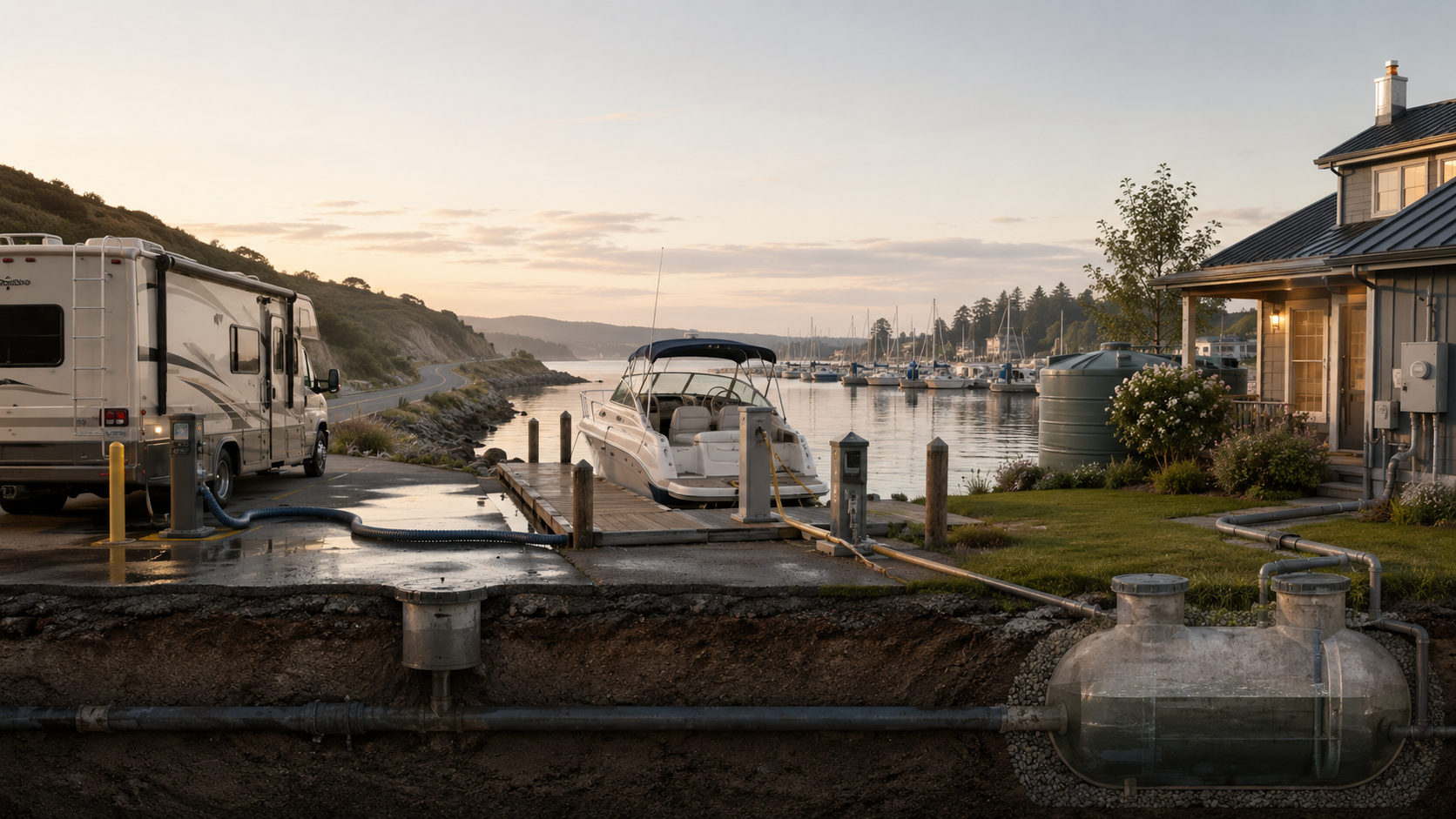
The Real Cost of Toilets: RV, Marine, Septic, Sewer vs. Waterless
A standard flush toilet uses about 18 gallons of water per person, per day — roughly 6,600 gallons a year, used purely to move waste from point A to point B. (EPA WaterSense)
The Real Cost of Toilets: RV, Marine, Septic, Sewer vs. Waterless
How much does a toilet really cost? The answer depends on more than the price of the toilet itself.
Traditional toilet systems often require ongoing expenses for water, chemicals, dump stations, pump-outs, sewer service, septic maintenance, or other infrastructure. For RVers, boat owners, off-grid homeowners, and anyone comparing waterless toilet options, those recurring costs can add up quickly.
Here’s how the costs compare.
How Much Does an RV Toilet Cost to Maintain?
RV toilets typically rely on a black water tank, treatment chemicals, water, and regular access to dump stations.
Common RV waste-management expenses include:
-
RV toilet chemicals: about $6–$29 per bottle
-
Dump station fees: typically $10–$25 per visit
-
Annual waste-disposal costs: potentially $300–$800 depending on travel frequency and dump access
There is also a logistical cost.
Travel plans may need to account for black tank capacity and the location of the next available dump station.
What are the hidden costs of an RV toilet?
Beyond the toilet itself, RV owners may need to pay for chemicals, tank treatments, dump station access, freshwater used for flushing and tank rinsing, and occasional black tank maintenance.
For frequent travelers or people living in an RV full time, those recurring expenses can become a meaningful part of the annual cost of ownership.
How Much Does a Marine Toilet Cost?
Marine sanitation systems introduce another set of expenses.
Boat owners may rely on holding tanks, sanitation hoses, pump-out facilities, or alternative waterless systems.
Typical costs can include:
-
Marine pump-outs: around $15–$40 per visit
-
Pump-out frequency: potentially every 3–4 weeks for some liveaboards
-
Holding tank and sanitation hose maintenance
-
Odor-control products and cleaning supplies
Holding tanks and hoses can also absorb odors over time, creating additional maintenance concerns.
What about incinerating toilets on boats?
Incinerating toilets are another waterless option, but they still have operating costs.
Typical expenses may include:
-
Purchase price: approximately $2,000–$6,500
-
Electricity or propane: approximately $150–$400 per year
-
Paper liners: required for each use on many systems
A toilet can be waterless without being maintenance-free or cost-free.
How Much Does a Septic System Cost?
For homes or cabins without municipal sewer access, installing a septic system can represent one of the largest costs associated with wastewater management.
A conventional septic system can cost $8,000 or more to install, depending on the property, soil conditions, system design, and local requirements.
Additional septic expenses can include:
-
Permits: approximately $250–$650
-
Septic pumping: around $300–$700 every 3–5 years
-
Leach field replacement: potentially $5,000–$12,000
These costs are separate from the price of the toilet itself.
Does a composting or waterless toilet eliminate the need for septic?
In some applications, a waterless toilet can significantly reduce the amount of wastewater infrastructure required for human waste.
However, local plumbing, building, wastewater, and permitting rules vary. Graywater from sinks, showers, washing machines, and other fixtures may still require an approved disposal system.
Always check local regulations before eliminating or modifying a septic system.
How Much Does Sewer Service Cost?
Homes connected to municipal sewer avoid septic installation and pumping, but wastewater disposal still carries a recurring cost.
Water and sewer rates have increased in many U.S. communities as utilities invest in aging infrastructure, treatment plants, pipes, and system upgrades.
That means the cost of a flush toilet includes more than the fixture.
It can also include:
-
Water used for flushing
-
Monthly water charges
-
Monthly sewer charges
-
Infrastructure costs built into utility rates
Whether the pipe is private or public, someone is paying to move waste through it.
How Much Water Does a Flush Toilet Use?
Toilets are one of the largest sources of indoor household water use.
Depending on the toilet and the number of flushes per day, one person can use thousands of gallons of water per year simply flushing waste.
Using an estimate of approximately 18 gallons per person per day, that works out to about:
6,570 gallons of water per person per year.
For two people, that's more than 13,000 gallons per year.
For four people, it can exceed 26,000 gallons per year.
Waterless toilets eliminate the need to use drinking-quality water simply to transport human waste through a plumbing system.
What Does a Waterless Toilet Cost Over Time?
The biggest difference between conventional toilets and waterless toilet systems is often not the purchase price.
It is the infrastructure around them.
Traditional systems may depend on:
-
Flush water
-
Sewer connections
-
Septic tanks
-
Leach fields
-
Holding tanks
-
Black water tanks
-
Pump-outs
-
Dump stations
-
Treatment chemicals
A well-designed waterless toilet can remove several of those recurring expenses.
How Does Virro Renew Compare?
Virro Renew is designed as a waterless toilet system that reduces dependence on conventional wastewater infrastructure.
Renew requires:
-
No flush water
-
No black tank chemicals
-
No paper liners
-
No RV dump station fees for toilet waste
-
No marine pump-outs for toilet waste
-
No septic tank or leach field for toilet waste
At $999 upfront, Renew replaces many of the recurring systems traditionally used to move and manage toilet waste.
The larger savings opportunity isn't simply using a different toilet.
It's eliminating the infrastructure, consumables, water, and recurring services that conventional toilets often require.
Which Toilet System Is Cheapest Long Term?
The cheapest toilet system depends heavily on where and how you live.
For someone already connected to inexpensive municipal sewer service, the economics may be different from those of an RV traveler, liveaboard boat owner, remote cabin owner, or off-grid homeowner.
But when comparing systems, consider the total cost of ownership, including:
-
Initial purchase price
-
Installation
-
Water use
-
Electricity or propane
-
Chemicals and consumables
-
Dump station fees
-
Pump-out fees
-
Septic installation
-
Septic pumping
-
Sewer bills
-
Repairs and maintenance
A toilet with a low purchase price can still require an expensive system around it.
A waterless toilet can cost more upfront while eliminating several ongoing expenses.
Frequently Asked Questions
How much does it cost to dump an RV black tank?
RV dump stations commonly charge around $10–$25 per visit, although prices vary by location. Some campgrounds, truck stops, and membership networks include dumping in another fee.
How much does an RV owner spend on black tank maintenance?
Costs vary depending on travel frequency, chemical usage, dump station availability, and whether dump fees are included with camping. Frequent travelers may spend hundreds of dollars per year managing black water.
How much does a boat pump-out cost?
Marine pump-outs commonly cost around $15–$40, depending on the marina and location. Some municipalities and marinas provide free or subsidized pump-outs.
How much does an incinerating toilet cost?
Many residential and marine incinerating toilets cost approximately $2,000–$6,500 before installation. Owners may also pay for electricity or propane and consumable liners.
How much does a septic system cost?
A new septic system can cost $8,000 or more, although total installation cost depends heavily on soil conditions, system type, engineering requirements, property size, and local permitting.
How often does a septic tank need to be pumped?
Many conventional septic systems are pumped approximately every 3–5 years, though actual frequency depends on tank size, household size, wastewater volume, and system condition.
Do waterless toilets save water?
Yes. Waterless toilets use no water for flushing, which can eliminate thousands of gallons of annual household water use depending on the toilet being replaced and the number of users.
Are waterless toilets cheaper than flush toilets?
They can be, particularly in locations where conventional toilets would require septic installation, holding tanks, pump-outs, dump stations, or expensive water and sewer infrastructure. Total savings depend on the application.
Does Virro Renew need a dump station?
Renew is designed to avoid the conventional black water tank and dump-station model used by many RV toilet systems.
Does Virro Renew use water?
No. Renew is a waterless toilet and does not require flush water.
Sources: EPA WaterSense · Truck Camper Magazine · GoDownsize · Camping World · Outdoor Miles · Boats.com · Cruising World · Florida DEP · EngineerFix · Waterless Toilet Shop · HomeGuide · Angi · NerdWallet · Bluefield Research · EnergyCAP · USGS
Ready to close the loop?
Explore Virro systems for homes, cabins, vehicles, and places beyond the grid.