

Why Separation Matters: Liquids, Solids, and a Cleaner System
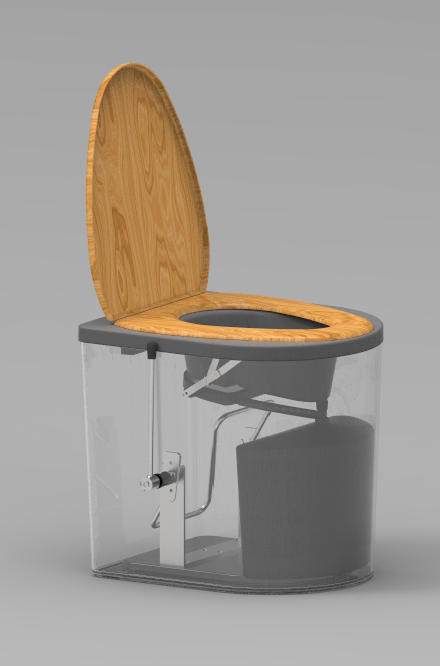
Every element of the Renew is designed around this logic. The bowl shape that guides streams apart. The carbon chamber that keeps solids aerobic. The float sensor that monitors liquids. The stabilizer that extends the window between empties. Each part serves a specific role because separation created two specific jobs to do.
Why Separation Matters: Liquids, Solids, and a Cleaner System
Composting toilets separate liquids and solids because the two materials behave differently. Keeping them apart controls moisture in the composting chamber, reduces odor risk, makes each stream easier to manage, and keeps the whole system simpler to maintain over time.
The cleanest composting toilet experience starts before composting begins. It starts with separation.
In a flush toilet, everything mixes immediately. Water, urine, feces, paper, and cleaning products become a single wastewater stream, processed at a treatment plant that may be miles away. A urine diverting composting toilet takes a different approach: it keeps the two streams apart at the source, so each can be managed appropriately on its own terms.
That design choice — simple in concept, significant in practice — is what makes the composting process cleaner, more stable, and easier to live with.
What Source Separation Means
Source separation means diverting liquids and solids before they can mix, at the point of use. In a urine diverting toilet, this is accomplished through the shape of the bowl itself: a forward-facing liquid channel guides urine into a separate collection path, while solids fall into the composting chamber below. No valves, no moving parts, no chemicals.
The result is two clean streams. Urine — nutrient-rich but liquid-heavy — goes to its own container or drain. Solids — which need structure, carbon, air, and time to stabilize — go to the composting chamber where conditions can be properly controlled.
Research on urine source separation has drawn attention in sanitation science for good reason. Urine carries a disproportionately high share of the nutrients in household wastewater — including nitrogen, phosphorus, and potassium — despite representing a small fraction of the total volume. Handling it separately preserves those nutrients for potential reuse and removes the largest source of liquid load from the composting side.
Why Moisture Control Matters
Healthy composting requires a specific moisture range — roughly 25 to 50 percent. Below that, microbial activity slows. Above it, the pile becomes waterlogged, oxygen is displaced, and the conditions shift from aerobic to anaerobic.
Urine adds significant liquid volume. A single adult produces roughly 1.5 liters of urine per day. In a mixed system, that volume alone can push the composting chamber well beyond the ideal moisture range, without any carbon correction keeping up.
When urine is diverted, the chamber stays drier by default. Carbon cover material does the remaining work of absorbing moisture from solids and maintaining the right balance. The system is simply much easier to keep in range — and a chamber that stays in range composts consistently without intervention.
How Separation Supports Odor Control
The compounds most responsible for sewage odor — hydrogen sulfide and ammonia — are produced when urine and feces mix and begin breaking down together in low-oxygen conditions. Separation removes the conditions that generate them.
Urine on its own, collected promptly and managed correctly, is largely odor-neutral. Solids, covered with carbon material and kept in an aerated chamber, break down aerobically with minimal smell. Neither stream poses a significant odor challenge when handled separately.
The key phrase is "managed correctly." Urine stored in a warm, sealed container will eventually begin to break down and produce ammonia. This is why Virro's Urine Odor Stabilizer is useful: it delays that breakdown, keeping the liquid container stable between empties. A small addition that makes a practical difference on warm days or in high-use situations.
What Happens to Each Stream
The liquid stream
Urine is collected in a sealed container below the toilet. Depending on the installation, it can be directed to a drain, an absorption field, or kept in a removable container for manual disposal. Diluted at roughly 10 to 20 parts water to one part urine, it can be applied to non-edible garden plants as a nitrogen-rich liquid fertilizer — sometimes called "liquid gold" in composting circles.
Virro's Float Sensor monitors the liquid container level and alerts when it is approaching capacity, removing the guesswork about when to empty. In a full-time residential setup, this is the portion of the system that requires the most frequent attention — typically every few days to a week depending on household size.
The solid stream
Solids enter the composting chamber and are immediately covered with carbon material — typically coconut coir, wood chips, or sawdust. Airflow from the ventilation system keeps the environment aerobic. Over time, the material breaks down into a dry, stable compost that is significantly reduced in volume compared to the original input.
The composting chamber in the Renew system is designed for accessible emptying. When the chamber reaches capacity — typically every few months for two adults — the contents are removed for further outdoor curing before eventual land application.
Explore the products that make each stream manageable:
Why Simple Systems Are Easier to Maintain
A separating toilet creates two predictable, manageable tasks instead of one unpredictable one. The liquid container follows a regular emptying schedule you can plan for. The composting chamber follows a longer cycle that you can check periodically. Each stream gives you clear signals — the float sensor tells you when the container is full; the chamber level tells you when it is time to empty.
Contrast that with a mixed composting system: moisture fluctuates with every use, odor events are harder to diagnose, and correcting an imbalance often means waiting for conditions to stabilize over days. Separation removes most of those failure modes.
This is also why urine diverting composting toilets have become the standard design in residential off-grid sanitation. The early mixed-chamber designs taught the field what not to do. Separation is what makes the technology reliable enough for everyday use.
Frequently Asked Questions
Why do composting toilets separate liquids and solids?
Because urine and feces behave differently and benefit from different handling conditions. Urine is liquid-heavy and nutrient-rich — it is best collected and managed or disposed of separately. Solids need a controlled aerobic environment with carbon and airflow to compost cleanly. Keeping them apart prevents excess moisture in the composting chamber, reduces odor risk, and makes both streams easier to manage independently.
Is urine sterile?
In a healthy person, urine leaving the body is essentially sterile — bacteria are not typically present when it exits. However, it can pick up bacteria from skin or the collection surface very quickly after leaving the body. For practical purposes, fresh urine is low-risk, and most guidance treats it as safe for diluted garden use on non-edible plants. Urine that has been stored for extended periods without stabilization is a different matter and should be handled with basic precautions.
Does urine go into the compost?
In most urine diverting systems, no. Urine is collected separately and either disposed of or used as diluted fertilizer. Adding urine directly to the composting chamber in volume would disrupt moisture balance and potentially create odor. Some composting setups do incorporate small amounts of urine for nitrogen balance, but this requires careful management and is not the standard approach in residential systems like the Renew.
Why not just mix everything together in a composting toilet?
Mixed-chamber composting toilets exist, but they are significantly harder to manage. The excess moisture from urine makes it difficult to maintain aerobic conditions, which leads to slower breakdown, odor risk, and more frequent interventions to correct the balance. Separation removes the largest variable — liquid load — and makes the composting environment predictable and stable. The maintenance difference in practice is substantial.
How do I know when the liquid container is full?
Virro's Float Sensor monitors the liquid container level and sends an alert before it reaches capacity. Without a sensor, the only option is visual checking — which is easy to forget in a high-use household. For full-time residential use, a float sensor removes one more thing to track manually.
Separation is not a workaround or a compromise. It is the feature that makes a composting toilet genuinely practical. Two clean streams, each managed on its own schedule, with clear indicators and straightforward maintenance — that is the system.
Every element of the Renew is designed around this logic. The bowl shape that guides streams apart. The carbon chamber that keeps solids aerobic. The float sensor that monitors liquids. The stabilizer that extends the window between empties. Each part serves a specific role because separation created two specific jobs to do.
Shop the full system:
Ready to close the loop?
Explore Virro systems for homes, cabins, vehicles, and places beyond the grid.