

Composting Toilet Odor Control: How It Actually Works
Odor control in a composting toilet is an outcome of good design and consistent habits — not products that cover up a problem after it forms. Source separation removes the biggest single source. Airflow removes the gases that do form. Carbon cover maintains the aerobic conditions that prevent them. And a brief weekly check catches anything that drifts before it becomes noticeable.
Odor Control Without Perfumes, Chemicals, or Guesswork
Composting toilets control odor through system design, not perfume. The main tools are source separation, airflow, carbon cover, moisture balance, sealed containment, and routine maintenance. When each element is working, the result is a bathroom that smells like nothing at all.
A good composting toilet should not smell like a toilet. It should smell like nothing.
That is a realistic expectation, not a marketing claim. But it depends on understanding where odor comes from and what prevents it. Odor in a composting toilet is almost always a symptom — a signal that one of the basics needs attention. Too much moisture. Not enough airflow. Not enough cover material. A container that needs to be emptied.
The best odor strategy is preventive. Separate liquids from solids. Add the right carbon cover after each use. Keep air moving through the system. Service the liquid container before it becomes urgent. When these habits are consistent, odor events are rare — and when they do occur, they are easy to diagnose and fix.
The Difference Between Odor Control and Odor Masking
Most bathroom odor products are designed to mask: spray a fragrance, light a candle, drop a tablet in the tank. The smell is covered temporarily while the underlying condition continues unchanged. That approach does not work in a composting system — and it can actually interfere with it.
Odor control, by contrast, means removing the conditions that generate odor in the first place. Two compounds are primarily responsible for the smell associated with human waste:
-
Hydrogen sulfide — the compound responsible for the sharp sewage smell. It is produced by anaerobic bacteria when waste is mixed and oxygen-deprived. In a well-ventilated composting system with separated streams, the conditions for hydrogen sulfide production do not exist.
-
Ammonia — the sharp, acrid smell that develops when urine breaks down. It forms when urea is converted by bacteria, particularly in warm, enclosed spaces. In a diverting system, this happens in the liquid container — not in the composting chamber.
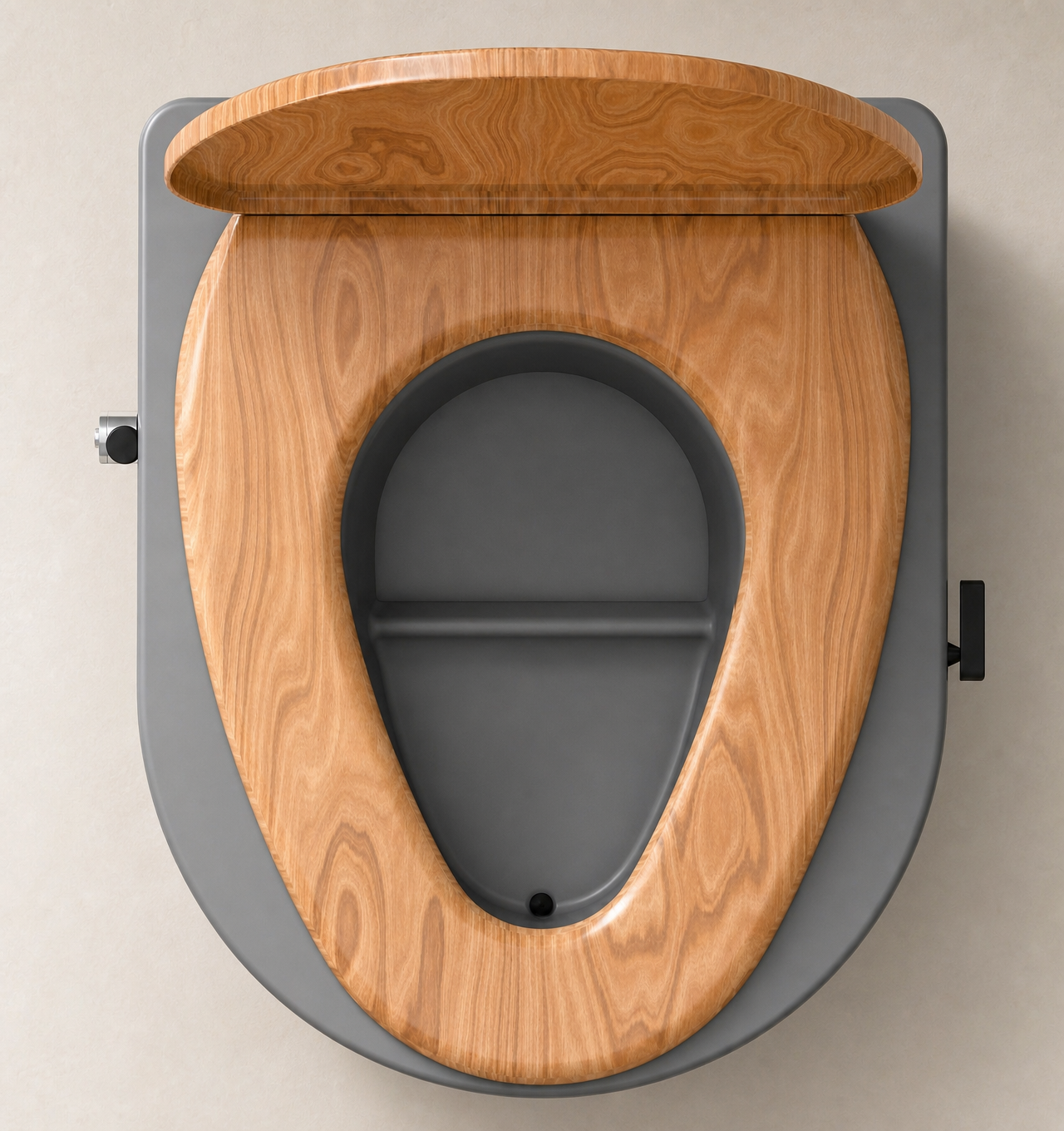
Addressing both compounds means controlling the environment, not covering up the result. The Renew system is designed to separate waste at the source, control odor through natural processes, and support contained decomposition. Every element of that design exists to prevent odor rather than to react to it.
How Airflow Keeps the System Stable
Ventilation is the foundation of a smell-free composting toilet. A proper vent stack creates a slight negative pressure inside the unit, drawing air downward through the bowl and out through the exterior vent. That airflow does two things simultaneously: it delivers oxygen to support aerobic decomposition, and it carries any trace gases away from the bathroom before concentrations can build.
The direction matters. Air should always be moving from the room, through the toilet, and out — never the reverse. A vent that is too narrow, too long, blocked, or incorrectly installed can reduce airflow to the point where the system loses its passive odor protection. In practice, this is the most common cause of odor events that are not related to maintenance.
The exit point of the vent stack is just as important as the stack itself. Virro's Round Exterior Vent is designed to exhaust cleanly while preventing insects, rain, and debris from entering the line. A blocked or improperly sealed exterior vent restricts the airflow the whole system depends on — even if everything else inside the unit is working correctly.
Once installed correctly, ventilation is passive and continuous. No power required, no settings to adjust. It simply works as long as the line stays clear.
Ventilation components:
What Carbon Cover Does
Carbon cover material is added after each solid use. Its job is to address the immediate post-use environment in the composting chamber — before decomposition has had time to progress. It does this in three ways:
-
Absorbs surface moisture from fresh material, preventing the wet conditions that lead to anaerobic breakdown
-
Physically covers waste, reducing direct exposure of decomposing material to the room air
-
Creates air pockets in the pile, allowing oxygen to penetrate deeper into the chamber over time
Carbon cover also corrects the carbon-to-nitrogen ratio in the pile. Fresh human waste is nitrogen-rich and carbon-poor — which, left alone, produces the conditions ammonia thrives in. Carbon material brings the balance toward the range that aerobic bacteria prefer, slowing ammonia production and keeping decomposition clean.
The right material makes a significant difference. Coconut coir is the recommended choice: it is highly absorbent, consistent in texture, sustainable, and breaks down well within the composting process. Wood shavings and sawdust also work. Avoid materials that are finely powdered (they compact and reduce airflow), already wet, or scented (fragrances can introduce unpredictable compounds into the pile).
The amount matters too. A generous, even layer after each use is far more effective than a thin covering. If odor is present around the bowl after use, the first thing to check is whether enough cover material is being applied.
Recommended carbon cover:
When Odor Means Maintenance Is Needed
Odor in a composting toilet is diagnostic. Different smells point to different causes, which makes troubleshooting straightforward once you know what to look for.
Ammonia smell
Source: the liquid container. Urine breaks down into ammonia when stored warm for too long. The fix is to empty more frequently, add Virro's Urine Odor Stabilizer to the container, and ensure the container is properly sealed between empties. In warm weather or high-use periods, the emptying interval often needs to shorten.
Earthy or stronger smell from the bowl
Source: the composting chamber, usually from insufficient carbon cover or an overfull chamber. Add more cover material and check whether the chamber is approaching capacity. If it is, plan an emptying. An earthy smell on its own is normal for an active composting chamber — a sharp or sewage-like smell is the concern.
Sharp or sewage-type smell
Source: anaerobic conditions developing in the chamber. This typically means the pile is too wet — either from excess liquid finding its way in, or from too little carbon cover over time. Add a generous layer of dry carbon material, check that the liquid diverter is seated and functioning correctly, and reduce use temporarily if possible to let conditions stabilize.
Smell in the room but not from the bowl
Source: the vent line. If odor is present in the room despite the bowl being fine, the ventilation is not drawing correctly. Check the exterior vent for blockages — debris, insects, or a bird nest. Verify the vent stack has no sharp bends or restrictions. If the vent line itself is correctly installed and clear, check the fan (if one is installed) is operating.
Odor management products:
Simple Weekly Checks
A composting toilet that is working correctly requires very little active management. A brief check once a week — five minutes at most — catches small issues before they become noticeable ones.
-
Liquid container level. Check visually or rely on the Float Sensor alert. Empty before it reaches full capacity. A container pushed to the limit is the single most common source of avoidable odor.
-
Carbon cover supply. Make sure there is enough material within reach for each use. Running out mid-week and using too little cover is an easy problem to prevent.
-
Exterior vent. A quick visual check outside that the vent is clear and unobstructed. Takes thirty seconds. Seasonal debris and insect activity are the main culprits.
-
Smell test. Open the toilet lid briefly and check — the chamber should be neutral to faintly earthy. Any sharp or ammonia character is worth addressing before it progresses.
These four checks cover the most common failure points. Most weeks, everything will be fine. The value is in catching the one week it is not.
Frequently Asked Questions
How do composting toilets control odor?
Through system design rather than fragrance. Source separation keeps liquids and solids in separate streams so neither creates the conditions for strong odor on its own. Ventilation draws air continuously through the unit and out, removing trace gases before they accumulate. Carbon cover absorbs moisture from solids and keeps the composting chamber aerobic. Sealed containment keeps the liquid stream closed until it is emptied. When all four elements are working, a composting toilet produces no perceptible odor in normal use.
Should I add vinegar to my composting toilet?
Generally, no. Vinegar is acidic and can disrupt the pH range that aerobic bacteria prefer — the same bacteria responsible for clean, low-odor decomposition. It may temporarily reduce some surface odors but does not address the underlying cause. If you are experiencing odor, diagnose which stream is the source and address that specifically: too little carbon cover, a liquid container that needs attention, or an airflow issue. These are more effective than any additive.
Why does my composting toilet smell like ammonia?
Ammonia comes from urine breaking down, almost always in the liquid container rather than the composting chamber. Common causes are a container that is too full, warm temperatures accelerating the breakdown process, and a container that is not properly sealed between empties. The fix is a combination of emptying more frequently, using Virro's Urine Odor Stabilizer to delay breakdown, and ensuring the container lid is seated correctly. In summer or during high-use periods, the emptying interval often needs to shorten by a few days.
How often should I empty the urine container?
For two adults under normal conditions, every three to five days in warm weather and up to a week in cooler conditions. The exact interval varies by household size, temperature, and individual use. The Virro Float Sensor monitors the container and alerts when it is approaching capacity — which removes the need to estimate. Without a sensor, checking every few days and emptying before it is completely full gives the most consistent odor control.
Does the ventilation fan need to run constantly?
If your installation includes an electric fan, yes — it should run continuously, not just during use. Passive odor control depends on maintaining constant airflow through the system. A fan that switches off between uses allows air to stagnate in the chamber and vent line, reducing the negative pressure that keeps odors from the room. The power draw of a small vent fan is minimal — typically 1 to 3 watts — and the benefit of continuous operation is significant.
Odor control in a composting toilet is an outcome of good design and consistent habits — not products that cover up a problem after it forms. Source separation removes the biggest single source. Airflow removes the gases that do form. Carbon cover maintains the aerobic conditions that prevent them. And a brief weekly check catches anything that drifts before it becomes noticeable.
When the system is set up correctly and used consistently, the result is straightforward: a bathroom that smells like nothing. That is the standard a well-designed composting toilet should meet, and what the Renew system is built to deliver.
Shop odor control essentials:
Ready to close the loop?
Explore Virro systems for homes, cabins, vehicles, and places beyond the grid.